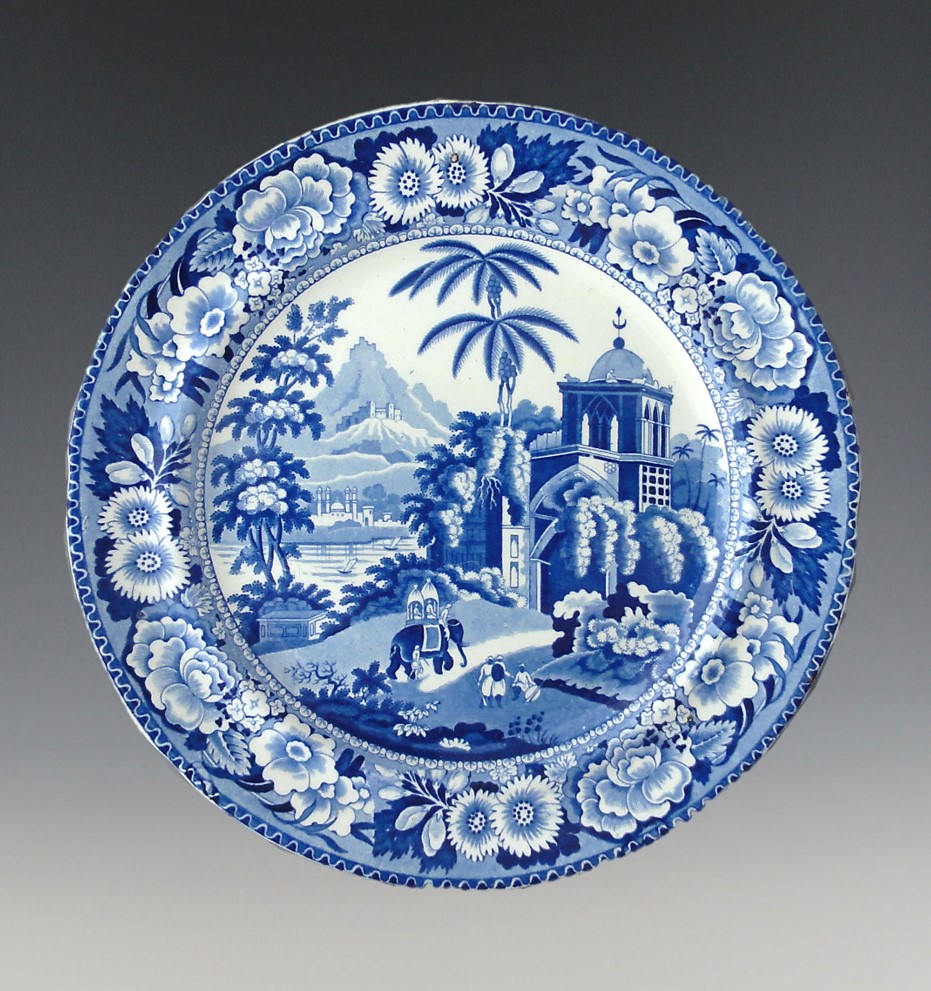
Plate, View in the Fort Madura
Item Number: P188
Item Shape: Luncheon Plate
Pattern Name: View in the Fort, Madura
Date: c. 1820-1830
Dimensions: D 8.55″
Maker: Herculaneum
Maker’s Mark: ImpressedDescription:
An earthenware plate printed in blue underglaze. As documented by Michael Sack, four source prints from “Oriental Scenery” by Thomas and William Daniell, in addition to the print for which the pattern gets its name, “View in the Fort, Madura” were used for this pattern. The following prints were used: “Ruins at the Antient City of Gour” (ruins to the left of the domed building), “View in the Fort of Tritchinopoly” (mountain in the background), and “The Punj Mahalla Gate, Lucnow” (elephant).
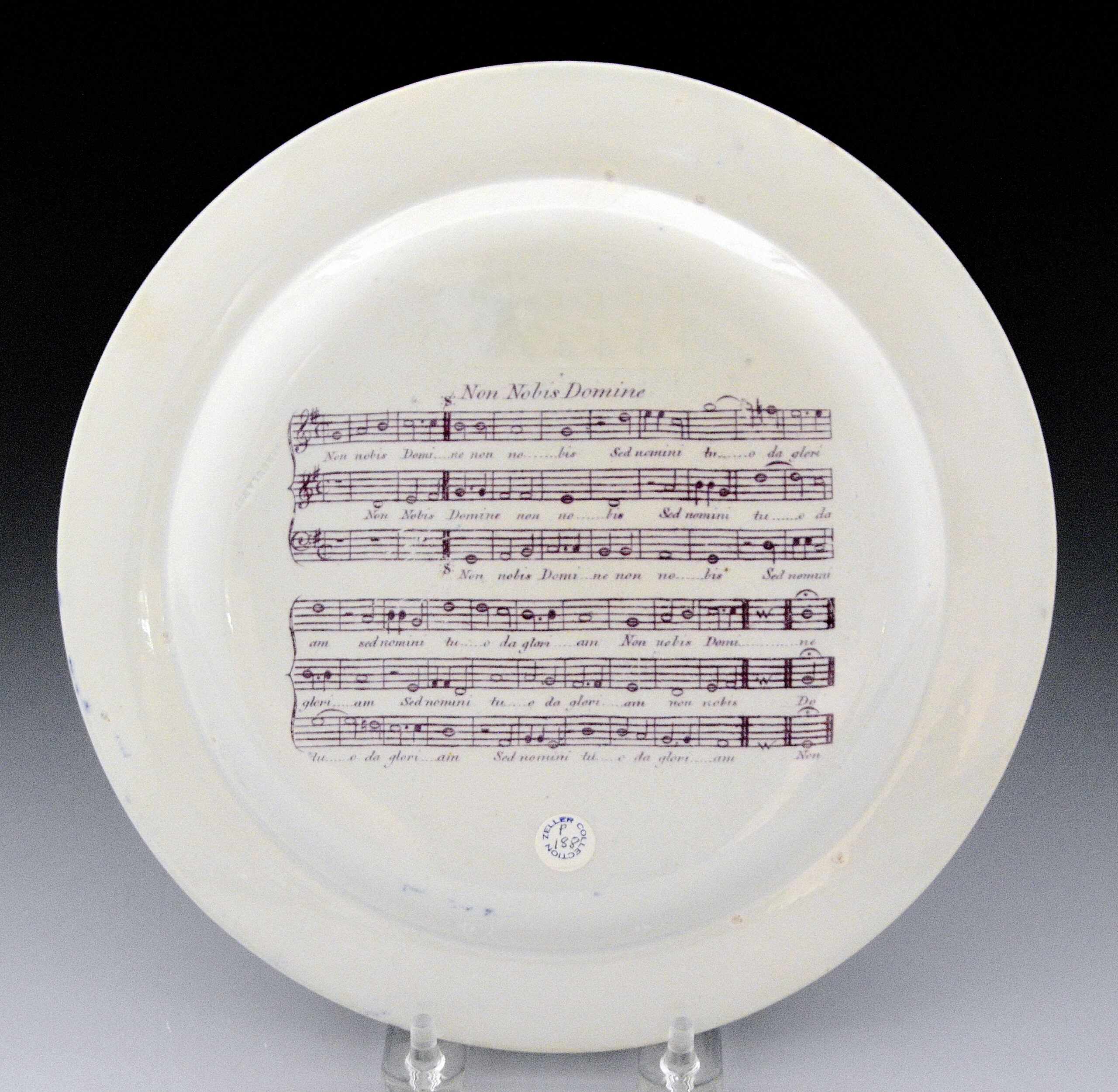
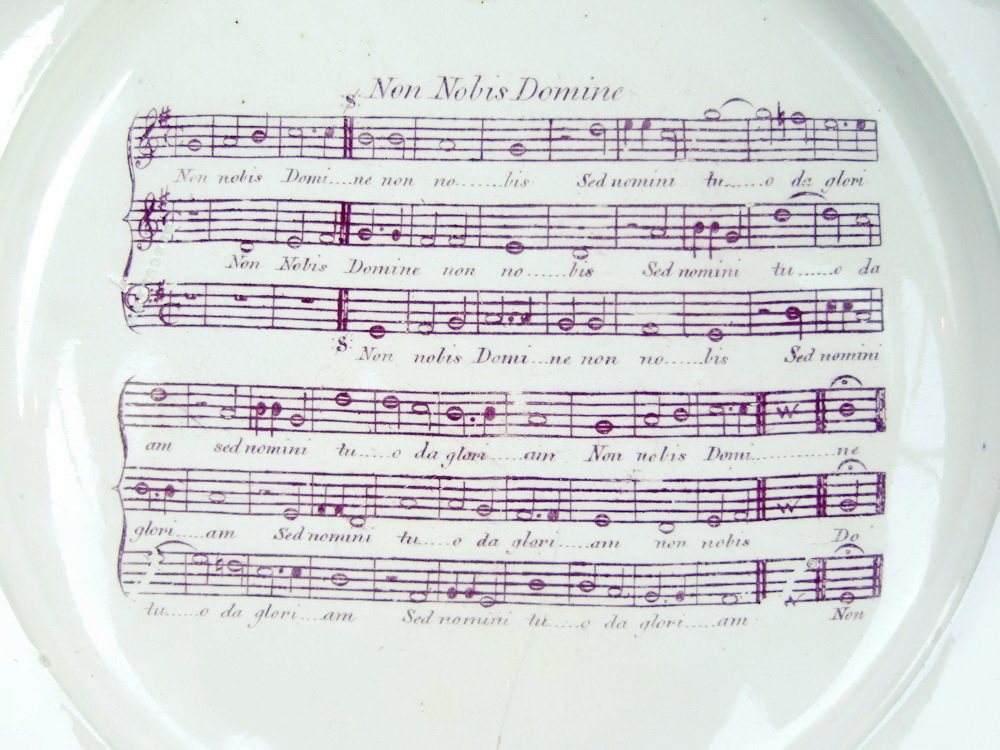
Printed on the back in puce is the song in Latin: “Non nobis, non nobis, Domine, Sed nomini tuo da gloriam.” English Translation: “Not to us, not to us, O Lord, But to your name give glory.” The Latin text derives from Psalm 113:9 (according to the Vulgate numbering), which corresponds to Psalm 115:1 in the King James Version. Non nobis Domine is now known in the form of a sixteenth-century canon derived from two passages in the motet Aspice Domine (a5) by the South Netherlandish lutenist and composer Philip van Wilder, who worked at the English court from c. 1520 until his death in 1554. Non nobis Domine is usually sung as a three-part perpetual canon with the two comites entering at the lower fourth and lower octave in relation to the dux. This is the version given in most of the early sources, but many other solutions are technically possible, a fact which has no doubt contributed much to its enduring appeal.
Non Nobis, Domine! Is the official school song of Craigholme Girls School, Glasgow, UK and The High School For Girls, Gloucester. It is also the official slogan of Guildford County School in Surrey, UK. According to Peter Hyland, author of the book on Herculaneum published in2005, this Pslam sometimes appears printed in black.
Condition: Very good.
Related products
-

Advertising Plate, London Tavern
Read more Preview -

Plate, Net Pattern
Read more Preview -

Advertising Plate, Yorkshire Relish
Read more Preview
Advertising Plate, London Tavern
This plate is now in the permanent collection of the Potteries Museum, Stoke-on-Trent, UK.